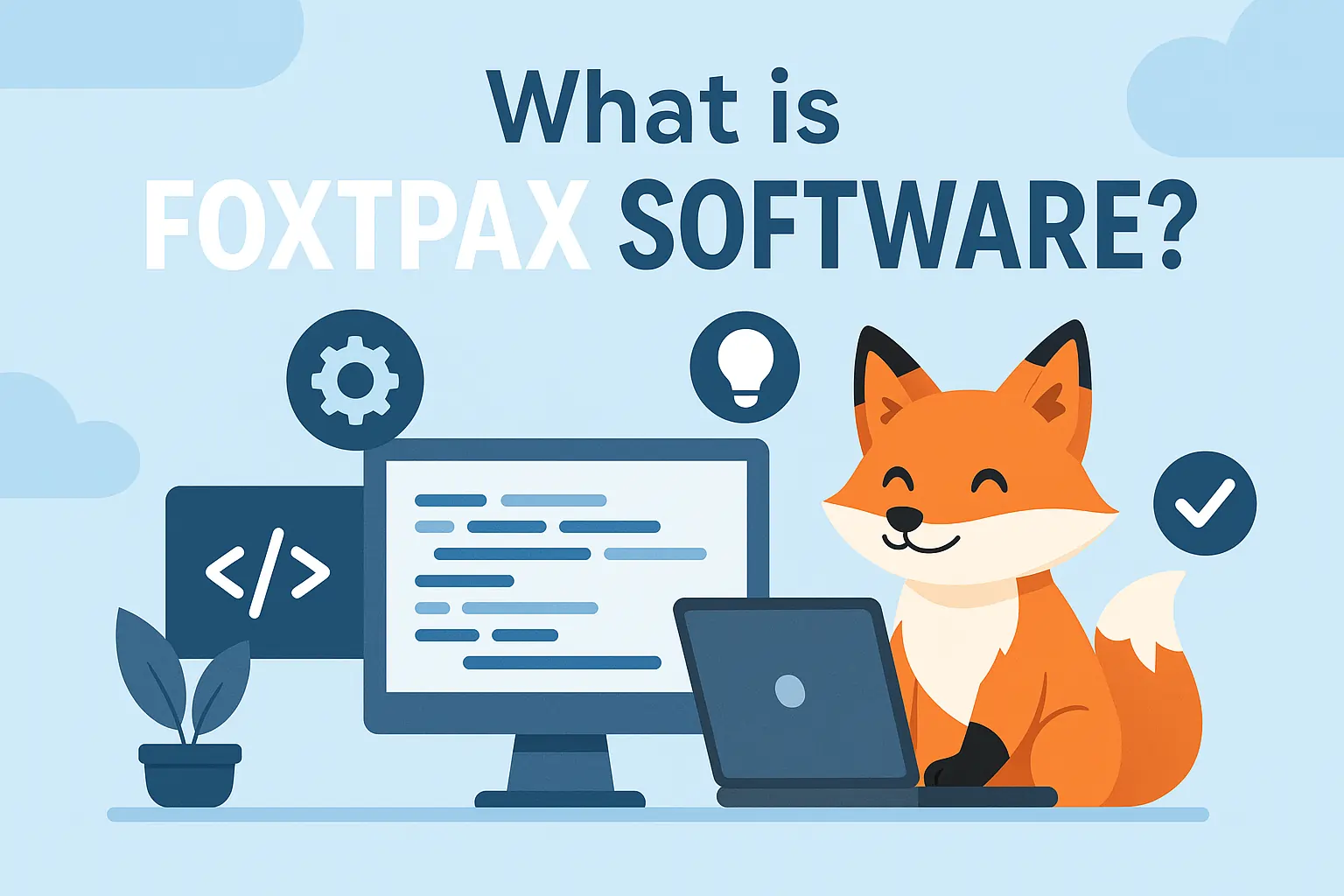
In the evolving world of software development, new tools, libraries, and frameworks emerge regularly. Among these innovations, one term has started to capture the attention of Python developers: what is foxtpax software python. Although it might sound unfamiliar at first, the term represents an emerging set of capabilities that’s creating buzz in tech circles—especially among developers working on scalable systems, modular architecture, and dynamic automation in Python environments.
So, what is foxtpax software python, really?
This comprehensive guide is designed to unpack the topic from all angles—origin, core functionality, use cases, architecture, strengths, limitations, and future potential. Whether you’re a backend developer, DevOps engineer, or Python hobbyist, this breakdown will help you understand why FoxTpax is being recognized as a specialized tool in Python-based infrastructures.
Introduction to FoxTpax Software in Python
Before diving into technical applications, let’s clarify the central question: What is foxtpax software python?
FoxTpax software, when discussed in the Python ecosystem, generally refers to a modular and flexible software toolkit or architecture designed to enhance transactional processing, environment state management, and data pipeline orchestration—all while leveraging Python’s native capabilities.
The term FoxTpax—a stylized acronym derived from “Flexible Orchestrated eXecution for Transactional Processing and Architecture Extensions”—represents a framework or toolkit aimed at simplifying complex, layered data flow and business logic in Python applications. It’s especially useful in situations where you need to manage multiple interdependent modules while maintaining data integrity, traceability, and testability.
Core Objectives of FoxTpax Software in Python
To truly understand what is foxtpax software python, we must look at the goals it aims to achieve:
- Decouple Business Logic from Data Flow:
It separates the how from the what—making systems more maintainable. - Enable Transparent Modular Design:
Modules in a FoxTpax-powered system communicate through well-defined interfaces, allowing plug-and-play behavior. - Support State-Aware Transactions:
The software manages transactional consistency across stages of a workflow. - Leverage Pythonic Simplicity for Complex Systems:
While handling complex enterprise-grade logic, the framework retains Python’s elegance and readability.
Architectural Overview of FoxTpax Software
Understanding the architecture is key to grasping what is foxtpax software python. Here’s a simplified view of the system’s components:
1. Process Nodes
These are the smallest building blocks of a FoxTpax system. Each node performs a specific task, such as transforming data, validating inputs, or triggering an external API. Think of them like Python functions that are state-aware and error-resistant.
2. Execution Chains
Process nodes are grouped into execution chains that represent end-to-end workflows. The chains are configured using YAML, JSON, or Python decorators, depending on the implementation preference.
3. Context Engines
Every execution chain runs inside a context engine, which maintains session data, execution history, rollback checkpoints, and error logs. This makes debugging and transaction recovery easier.
4. IO Hooks and Adapters
FoxTpax interfaces with external services through IO hooks, which can be customized to suit REST APIs, databases, or cloud storage systems. This keeps integrations cleanly separated from logic.
5. Error and Rollback Handling
The framework includes robust error management. Each step can define a rollback routine, ensuring that transactional integrity is never compromised—even across distributed components.
Use Cases for FoxTpax Software in Python
Why is there so much interest around what is foxtpax software python? Because it fits a range of high-value use cases.
1. Financial Transaction Systems
Managing user payments, subscriptions, refunds, or credit scores involves sensitive state changes. FoxTpax provides the transactional backbone and rollback support needed in these environments.
2. ETL and Data Pipelines
Extract-Transform-Load processes often suffer from fragile sequencing and lack of visibility. FoxTpax enhances control, traceability, and step-by-step debugging in Python-driven pipelines.
3. Microservice Orchestration
In containerized applications with loosely coupled services, FoxTpax helps define logic flow between services without hardwiring dependencies.
4. Automated Testing Infrastructure
When test suites span across multiple environments or stages (mock data, staging APIs, file I/O), FoxTpax provides predictable execution and state validation.
5. Workflow Automation
Whether it’s user onboarding or order processing, workflows often involve multiple logic steps and conditional branches. FoxTpax can orchestrate them seamlessly with visibility at each stage.
How FoxTpax Stands Out Among Python Frameworks
There are many Python libraries aimed at orchestration, workflow management, or transactional control. So why does what is foxtpax software python matter in this crowded field?
Here’s what makes FoxTpax unique:
- Granular Control with Declarative Simplicity: Developers can define what they want done without micromanaging how it happens under the hood.
- Error Isolation Per Node: A single failing node won’t crash the entire pipeline.
- Clear Rollback Protocols: FoxTpax brings the safety of traditional database transactions to distributed or in-memory Python workflows.
- Visual Execution Maps: Tools exist to visualize workflows dynamically, which is rare in lightweight Python frameworks.
- Multi-Environment Compatibility: Works well in local, Dockerized, and cloud-based environments alike.
Implementing FoxTpax: A Developer’s Perspective
Let’s say you’re working on a project that processes e-commerce orders. Here’s a simplified workflow:
- Validate the order
- Check inventory
- Process payment
- Generate invoice
- Send email confirmation
Using the FoxTpax approach, you’d define each of these steps as individual nodes. Then, you link them via an execution chain and run the sequence through a context engine.
Each node can define its own:
- Input parameters
- Execution function
- Validation logic
- Error handling
- Rollback function
When a node fails (e.g., payment processing fails), the context engine halts the chain and invokes rollback handlers for previous steps (e.g., reverting inventory reservation).
This is what foxtpax software python excels at—giving you the confidence that your process won’t silently fail or leave your system in a broken state.
Limitations of FoxTpax Software
To present a fair picture of what is foxtpax software python, we must acknowledge some challenges:
- Learning Curve: Developers unfamiliar with transactional systems might find the node/chain/context abstraction initially complex.
- Limited Community Resources: As a newer or niche tool, tutorials, Stack Overflow support, and open-source integrations are limited.
- Performance Overhead: Each node runs inside a context, and rollback mechanisms add processing layers, which might slow down high-frequency systems.
Still, for systems where correctness, traceability, and modularity matter more than raw speed, FoxTpax is a compelling choice.
Best Practices for Using FoxTpax in Python
Now that we’ve explained what is foxtpax software python, let’s look at how to make the most of it.
✅ Keep Nodes Small and Focused
Each node should do one thing well. This keeps logic clean and reusable.
✅ Use Context Tags for Debugging
Add custom tags to help log and trace execution paths.
✅ Define Rollbacks Even for ‘Safe’ Steps
You never know what might fail downstream. Define rollback steps to maintain consistency.
✅ Separate IO and Business Logic
Keep external API/database calls outside of core logic nodes. This enhances testability and resilience.
✅ Log Everything in Context
Because FoxTpax preserves logs at the node and chain level, integrate a logging framework early for maximum visibility.
The Future of FoxTpax and Its Role in Python Development
The increasing adoption of microservices, data-intensive applications, and automated decision-making systems creates a perfect storm for tools like FoxTpax.
As Python continues to dominate fields like machine learning, automation, and backend services, developers need tools that go beyond simple scripting. They need orchestration, consistency, and stateful execution—and that’s what foxtpax software python promises.
We anticipate wider adoption in:
- Fintech
- Data engineering
- DevOps pipelines
- Cloud automation
- AI workflows (for managing model pipelines)
Conclusion: Why Developers Should Care About What Is FoxTpax Software Python
To wrap up, what is foxtpax software python? It’s not just a framework or a tool. It’s a mindset shift in how we design, manage, and execute complex logic in Python applications.
With its node-based architecture, stateful execution, error handling, and modular design, FoxTpax addresses the messiness that often creeps into real-world applications. While it may not yet be mainstream, early adopters are finding it a valuable addition to their development toolkit.
If your Python application deals with critical sequences, multiple modules, or heavy transactional flows, FoxTpax may be the architecture that finally brings order to your chaos.
A great resource worth exploring is stylishfoodstyling.pics.
We also recommend visiting zixelpapers.space.
You might also find valuable information at techsaga.space.
For related content, take a look at bitsandblogs.space.